



“Every breakthrough begins with a possibility, and every successful trial brings that possibility closer to patients.”
New drug approvals represent remarkable progress. But ensuring that these treatments reach the patients who need them is an equally important part of healthcare.
Imagine waiting months, or even years, for a treatment that could change your life.
You finally hear the news: a new medicine has received FDA approval. There is excitement, hope, and a sense that things might finally become easier.
But then come the questions.
Will the treatment be covered by insurance? How do you enroll in a patient support program? Is prior authorization required? Where do you get medication? Who helps you navigate the process?
An FDA approval might feel like the finish line. In reality, it is often the beginning of another journey.
And this is where the pharmaceutical industry faces one of its most important challenges: turning medical innovation into accessible patient care.
A New Wave of Pharmaceutical Innovation
The pharmaceutical industry continues to evolve, with companies exploring new treatment approaches for diseases that affect millions of people worldwide.
Recent FDA approvals in 2026 offer a glimpse into how different this innovation can look.
Consider a child living with type 2 diabetes. Managing the condition involves more than medication. It requires regular monitoring, treatment schedules, and support from caregivers.
In October 2026, the FDA approved Awiqli (insulin icodec-abae), developed by Novo Nordisk, as the first once-weekly insulin treatment option for pediatric patients aged 10 years and older with type 2 diabetes.
Unlike traditional daily basal insulin injections, Awiqli offers a once-weekly dosing option. While glucose monitoring and medical supervision remain essential, this development introduces another possibility for eligible children and their families.
Read the FDA’s official announcement on Awiqli’s approval for pediatric patients.
Now consider the evolving pharmaceutical landscape. Recent FDA approvals, including ATEBRIOZ for FOP, VOCERYQ for recurrent respiratory papillomatosis, Hibsago for chronic hepatitis B, and Sunharbo for stroke prevention, highlight the continued progress in bringing new therapies to market.
While each development represents a different treatment milestone, they also bring new considerations for pharmaceutical companies preparing to introduce and support these therapies.
Explore the FDA’s official Sunharbo approval announcement.
As new treatments enter the market, managing patient enrolment, benefit verification, documentation, reimbursement coordination, and ongoing patient support becomes an important part of the launch process.
Once a new therapy moves closer to market, pharmaceutical companies must prepare for the complexities of commercialization. Beyond manufacturing and distribution, this involves coordinating patient enrolment, insurance and benefit verification, documentation, reimbursement processes, and ongoing patient support.
As these activities become part of the launch journey, technology and specialized healthcare services play an important role in connecting different processes. Companies such as Value Health are part of this evolving ecosystem, bringing together AI-powered platforms, automation, and healthcare expertise to support the operational side of pharmaceutical commercialization and patient access.
But Is Getting a Drug Approved Enough?
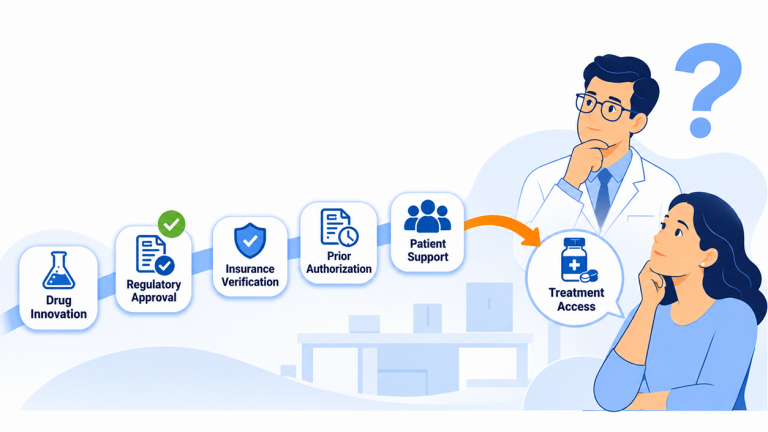
Let’s look beyond scientific achievement for a moment.
A pharmaceutical company may spend years researching a drug, conducting clinical trials, evaluating safety, and finally securing regulatory approval.
But what happens when the first patient receives a prescription?
The patient may need insurance verification before beginning treatment. The healthcare provider may need to submit additional documentation. A prior authorization request might be required. The patient may also need financial assistance or enrolment in a support program.
Suddenly, a seemingly straightforward treatment journey involves several people, organizations, and processes.
For pharmaceutical companies launching new therapies, especially specialty and high-cost medications, these operational requirements can become increasingly complex.
A delay in documentation, an incomplete enrolment form, or a pending insurance verification can create additional work for support teams and potentially delay the next step in a patient’s treatment journey.
The challenge is no longer just developing the right medicine. It is also building the right support system around it.
The Invisible Journey Behind Every Prescription
Think about everything that needs to happen before a patient can begin a newly prescribed specialty treatment.
A patient submits an enrolment form. Documents arrive through different channels. The support team checks insurance eligibility and coverage. If additional information is needed, someone follows up with the healthcare provider.
Meanwhile, another patient is waiting for prior authorization, and another needs assistance understanding their treatment support options.
When these activities are managed through disconnected systems and manual processes, even routine tasks can consume valuable time.
This is why patient support operations have become an important part of pharmaceutical commercialization.
Patient Support Programs (PSPs) play an important role in helping patients access and continue their prescribed treatments. As pharmaceutical companies introduce new therapies, these programs become an important part of the broader commercialization and patient access journey.
Patient Support Program (PSP) Solutions in Pharma
A successful pharmaceutical launch extends beyond introducing a therapy to the market. Ensuring that patients can access their prescribed treatments requires pharmaceutical companies to have the right support infrastructure in place.
As the industry moves towards more connected patient access operations, platforms such as Value Health’s PSP centric platform are becoming part of this ecosystem.
Our platform supports pharmaceutical organizations through:
- Connected Patient Support
- Streamlined Programm Operations
- Improved Case Visibility
- Coordinated Patient Engagement
By connecting patient support operations through technology,We contribute to the infrastructure that helps pharmaceutical companies move from product commercialization towards effective patient access.
Making Insurance Verification More Efficient
Insurance verification is an important part of the patient access journey. When coverage information is scattered across multiple sources, confirming benefits and understanding patient responsibilities can become challenging.
Through its Electronic Benefit Verification (eBV) capabilities, Value Health helps address these challenges by bringing key insurance information into better view:
- Insurance eligibility and coverage verification
- Formulary and medication coverage checks
- Copay and deductible visibility
- In-built Prior authorization requirements
AI-Powered Document Processing in Healthcare
Document processing is another area where manual workflows can slow down patient support operations. Handling referrals, identifying missing information, and processing documents across different channels can create delays.
To address this challenge, Value Health’s Automated Document Intake uses AI-powered capabilities to support:
- AI-powered information extraction
- Document validation and completeness checks
- Automated case creation and task routing
- Human review of exceptions and complex cases
The Next Pharmaceutical Breakthrough May Need More Than Science
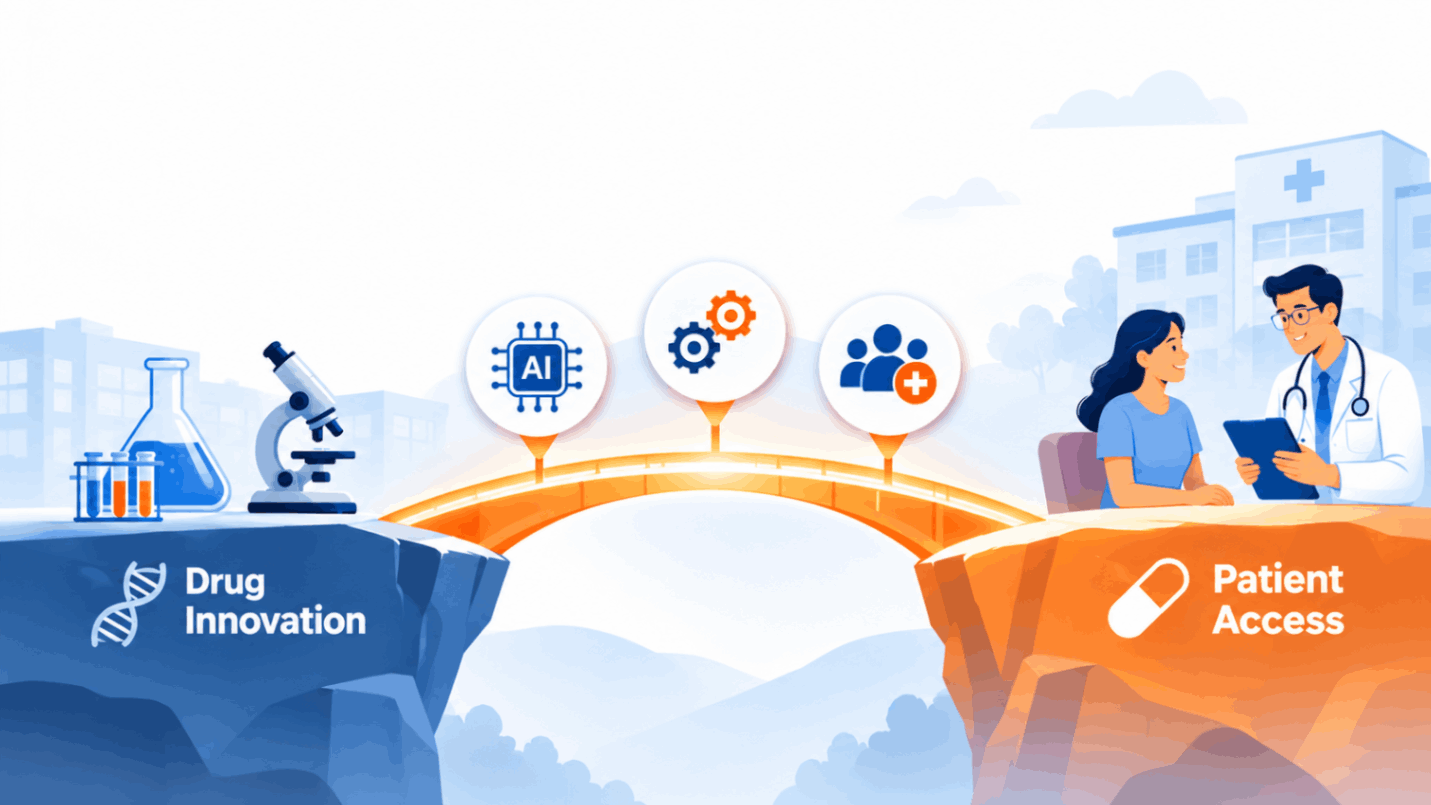
Recent drug approvals reflect the rapid progress of pharmaceutical innovation across therapeutic areas, from diabetes and rare diseases to cancer, infectious diseases, and stroke prevention.
But regulatory approval is only the beginning. The real challenge lies in ensuring patients can access these treatments while pharmaceutical companies manage insurance requirements, patient support programs, documentation, and increasingly complex operational demands.
This is where technology becomes essential. AI, automation, and connected healthcare platforms can help bridge operational gaps, improve coordination, and make patient support more efficient.
For pharmaceutical companies, patient access must be part of the commercialisation strategy from the outset. For healthcare technology partners, the focus is on connecting innovation with the operational support needed to bring treatments closer to patients.
At Value Health, we believe healthcare innovation goes beyond developing new medicines. It also means strengthening the systems that help patients access them.
The future of healthcare isn’t just about what medicine can achieve. It’s also about how effectively we help patients reach it.